- HSM
- PET Solutions
- Sustainability through PET Recycling
- Legal foundations
PET Recycling – Legal Foundations
In 2018, the European Union published the “European Strategy for Plastics in a Circular Economy.” The paper addresses, among other things, the EU-wide ban on single-use plastics as well as defined recycling targets for EU member states. The European Union justifies the necessity of this strategy by stating that environmental damage amounting to 42 billion euros can be avoided.
Currently, more than 80% of the waste in the oceans consists of plastics, half of which comes from single-use products. Therefore, the regulations of the published strategy specifically target the products that most frequently end up in the environment. This is intended to ensure environmental protection.
One thing is certain: these regulations mean a change in mindset for states, companies, and consumers in dealing with plastic and its production.
What does the EU ban mean for companies? What does the EU ban mean for consumers?
With the “European Strategy for Plastics in a Circular Economy,” the production of single-use plastic has been banned EU-wide since July 3, 2020. With this ban, the EU aims to restrict the consumption of single-use plastic and thereby reduce the amount of plastic waste and disposable items.
According to the German Federal Ministry for the Environment, around 320,000 single-use cups are consumed every hour in Germany. Up to 140,000 of these are to-go cups – disposable items that end up in the rubbish afterward.
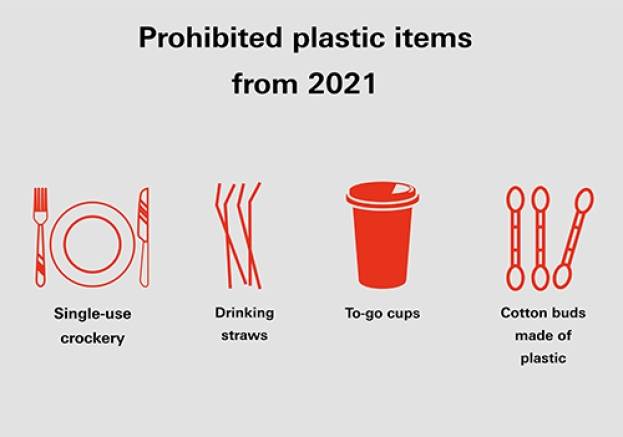
Therefore, the following single-use products have been banned as of 03/07/2021:
- Plastic cutlery
- Plastic tableware
- Plastic drinking straws
- Styrofoam (polystyrene) containers for hot food and drinks
- Plastic cotton buds
From 2021 onwards, products containing a certain amount of plastic must include a notice on the packaging indicating this.
In Germany, from 2022 onwards, plastic shopping bags may no longer be offered in supermarkets. This was decided by the Bundestag (the German Parliament). However, particularly durable reusable bags and thin plastic bags for fruit and vegetables are exempt from this regulation
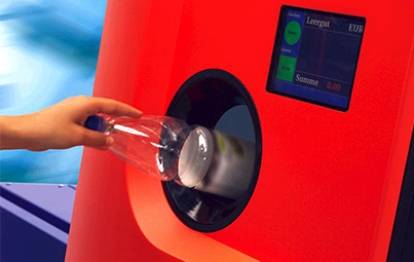
Mandatory return of deposit bottles
In countries where a deposit system is already in place, retailers are also required to take back deposit bottles.
Single-use: a retailer is obliged to take back single-use deposit bottles made of the same material as those he offers for sale. So, if a retailer sells PET bottles, he must also take them back, regardless of whether he sells the exact same bottles.
Reusable: since reusable bottles are always subject to a deposit-return system, a retailer must also take these back. However, only those that he also offers in his assortment. If a retailer only sells mineral water, he does not have to take back a juice bottle.
Deposit system = obligation to charge a deposit on, for example, packaging or bottles.

Packaging Act
With regard to the Packaging Act/packaging regulations, the European Union requires its member states to recycle at least 65% of their packaging waste. In addition, there are minimum weight requirements for recycling, such as:
- 50% by weight for plastics
- 75% by weight for paper and cardboard
This means that at least 50% by weight of plastic waste must be recycled.
By 2030, this quota will increase to 70%. These requirements must be implemented and complied with by the countries.
The German Packaging Act, for example, is even stricter and stipulated, as early as 2022, that at least 63% of plastic and 85% of paper packaging waste must be recycled.
Summary: EU-ban on single-use plastics and requirements regarding packaging – what is valid from when?

Ban on placing the following single-use plastic items on the market:
- Plastic cutlery
- Plastic tableware
- Plastic drinking straws
- Styrofoam (polystyrene) containers for hot food and drinks
- Plastic cotton buds
Mandatory labeling of single-use plastic items by manufacturers, such as:
- Tobacco products with filters
- Beverage cups
- Feminine hygiene products
- Food containers
- Wet wipes
Extended producer responsibilities when placing single-use plastic items on the market.
All beverage containers up to 3 liters must be collected separately at a rate of 77% (collection rate).
PET bottles must consist of at least 25% recycled plastic.
From 2026, a significant reduction in the consumption of single-use plastic items must be measurable.
All beverage containers up to 3 liters must be collected separately at a rate of 90% (collection rate).
PET bottles must consist of at least 30% recycled plastic.
These requirements regarding the ban on single-use plastics as well as the Packaging Act affect both companies (manufacturers) and consumers. To achieve the EU targets and objectives, both sides must take action. Companies (manufacturers) need to focus more on recycling and sustainability, while consumers should consider sustainability more strongly in their purchasing decisions.
Implement PET recycling in your company with PET disposal solutions from HSM!
If you want to learn more about the EU requirements, read the Directive of the European Parliament and of the Council on the reduction of the impact of certain plastic products on the environment.


